

How to Drink Milk Tea the Right Way and Make It Healthier
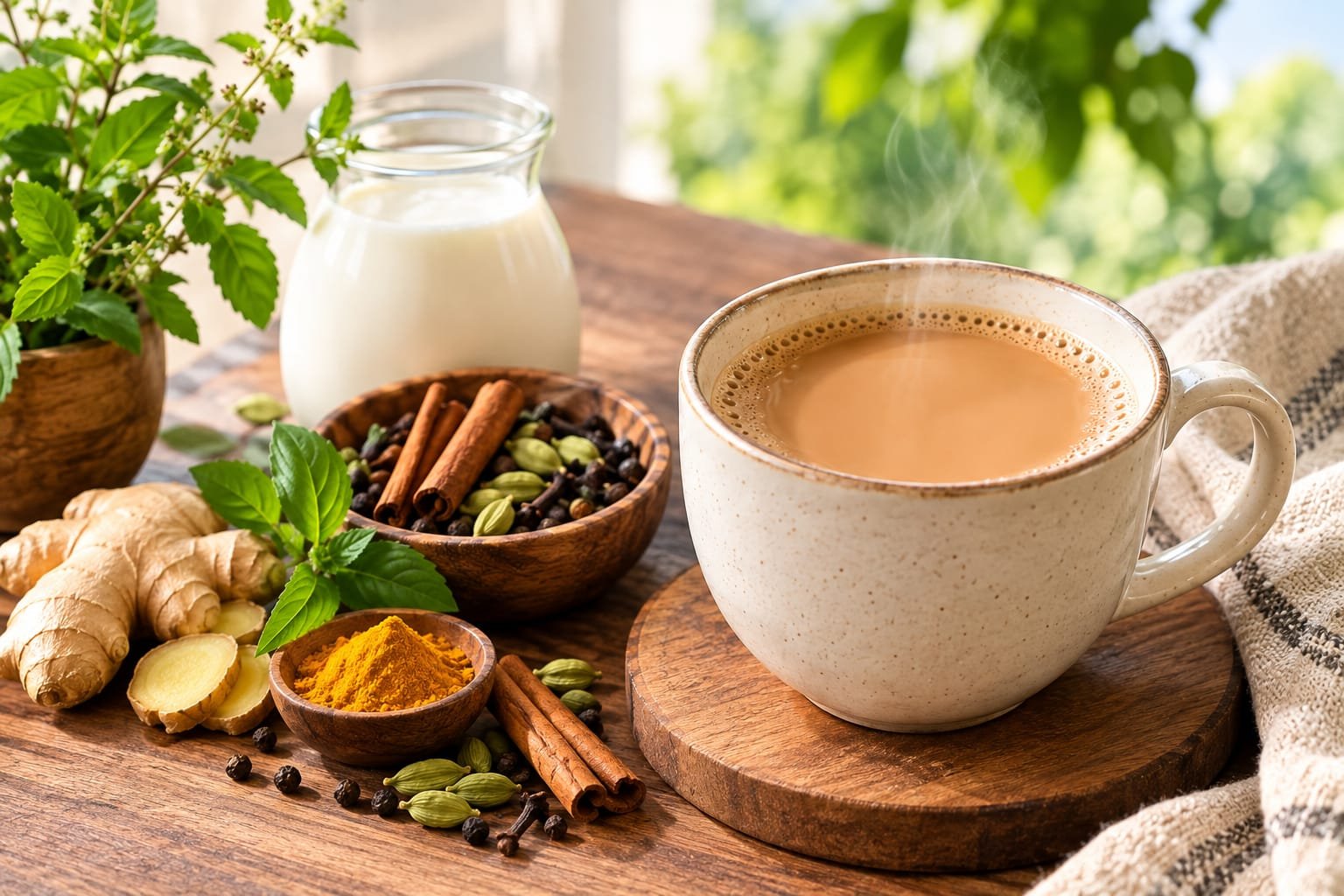
Milk tea has become an important part of the Indian diet and it has been next to impossible for many Indians to avoid drinking milk tea (known as chai). People don’t even prefer reducing their tea consumption even though it may be harmful for some. But here is some good news for chai lovers. If we keep a few simple things in mind while making our tea, we can reduce many of its harmful effects. In fact, with the right ingredients and preparation, the same tea may also support healthy blood pressure, blood sugar, digestion, belly-fat management, and heart health.
If you make and drink tea the right way, it may not cause harm but instead provide benefits. This is because tea contains antioxidants such as flavonoids and polyphenols. However, unknowingly, while making tea, we make some mistakes because of which we are unable to get the maximum benefits from these antioxidants. A long-term study was conducted on 498,000 people for 11.2 years, in which some things came to light that can help us make tea healthier instead of unhealthy. However, there are still several things that we need to keep in mind.
Avoid These 2 Common Mistakes While Making Your Daily Tea
1. Don’t Over Boil
Although over-boiling may make your tea stronger, it can greatly reduce its antioxidants. Also, the longer you boil tea, the more tannins are released. These tannins are one of the reasons why people who drink very strong tea may start developing dark stains on their teeth. They can also increase acid in the stomach and affect the absorption of nutrients from food.
This is why tea from tea stalls is often considered more harmful, as they tend to boil the tea for a long time and use the same tea leaves several times.
2. Don’t Add Sugar
It has been observed that when sugar is added to tea, its antioxidants are reduced. However, most of us do not like to drink tea without sugar. Many people cannot stay without their daily tea, but if you give them tea without sugar, they may not even drink it because sugar itself can become a habit.
But why add such sweetness to your tea when sugar is processed using sulphur and other chemicals, leaving almost nothing nutritious in it? If you want to add something sweet to your tea, you can use desi khand or powdered dhage wali mishri instead.
Jaggery tea may sound like a healthy option, but according to Ayurveda, jaggery and milk are not considered a good combination. You may have noticed that when jaggery is added to boiling milk, the milk can curdle. Therefore, jaggery tea is not considered a healthy option because it may upset your stomach.
7 Simple Ingredients That Can Make Your Tea Healthier
There are some ingredients that you can add while making your tea to make it not only tastier but also healthier.
1. Green Cardamom
Green cardamom does not just provide strength to the body, but it is also anti-inflammatory. Because of this, regular consumption of cardamom may help prevent several diseases.
2. Cloves
In Ayurveda, cloves are known as Lavang, which means something that makes the organs flexible. Cloves help keep the small and large blood vessels in your body flexible.
3. Ginger
If you have pain anywhere in your body or want to reduce pain, make sure to add ginger to your tea.
4. Cinnamon
If your blood sugar levels increase, there is hardly anything better than cinnamon to add to your tea. As its name suggests, cinnamon also has a naturally sweet taste.
5. Licorice (Mulethi)
Tea is drying in nature, but licorice is considered its counterbalance because it helps moisturize the inner vessels. Licorice is also considered very beneficial for problems related to the lungs. If tea causes mucus in some people, adding licorice may also help make it better.
6. Fennel Seeds
People who frequently experience acidity, sour burps, or stomach ulcers should start adding fennel seeds to their tea. Thick fennel seeds are considered better than thin fennel seeds.
7. Arjun Bark
If you have any heart-related problems, such as high blood pressure or high cholesterol, you should add Arjun bark to your tea. Arjun bark naturally sheds from the base of the Arjun tree. You can either make its powder at home or buy it in powder form from a good company. Add a small amount to your tea, you will not notice much difference in its taste, but it can provide many benefits.
Among these ingredients, some have a cooling nature while others have a warming nature. Overall, they are balanced. It is not necessary to add all of these ingredients. You can choose and add them according to your needs.
Should You Add Milk to Your Tea? Modern Science vs. Ayurveda
Another thing that has come up in modern studies, where there is a conflicting opinion with Ayurveda, is that milk should not be added to tea. You may be surprised, but most of the benefits of tea that we usually read about are based on studies conducted on black tea or green tea, meaning tea without milk or sugar.
According to modern science, adding milk to tea reduces its antioxidants. However, Ayurvedic practitioners say that although adding milk may reduce some antioxidants, tea is hot and dry in nature, so adding milk helps balance it. Milk is oily and also has a cooling nature, which is why adding a little milk to tea can also be considered suitable.
How to Make Healthy Masala Tea
To make tea, first add water to a pan. If you are making one cup of tea, add one cup of water. Add whichever of the seven ingredients we discussed according to your preference and boil it until the water is reduced to half. This allows the effects of these herbs to be fully released into the water.
Now add the tea leaves, and as soon as you add the tea leaves, add a little milk. Let it come to just one boil, then turn off the gas. Finally, add your sweetener, strain the tea, and drink it. This is how you can make healthy masala chai.
When Should You Avoid Tea
Now let’s discuss when you should drink tea, when you should avoid drinking it, and how many cups of tea you should have in a day.
No matter how healthy a food or drink is, if you consume it at the wrong time, it can still harm you.
1. Immediately After Waking Up
People who drink bed tea as soon as they wake up may age faster and develop wrinkles on their face earlier than expected. After a full night of sleep, our brain and body are low on water. If we drink tea at this time, which is a diuretic, it can cause further dehydration in the body.
This can reduce the natural lubrication in the knees, cause dryness in the skin, and make the hair dry as well. However, if you are someone who cannot feel active or function properly without tea, drink a glass of warm water on an empty stomach as soon as you wake up. This will help you feel more energetic and may also boost your metabolism.
2. Immediately After Meals
Many people drink tea after breakfast. Whether it is breakfast or lunch, if you drink tea immediately after eating, it can lead to a deficiency of important nutrients such as iron, zinc, calcium, and vitamin B in the body.
The tannins present in tea also prevent the absorption of protein from food. Scientific studies have shown that the tannins in tea can bind with these minerals and interfere with their absorption.
You should avoid drinking tea for at least one hour after a meal. If you feel like having something to drink after eating, buttermilk is a better option as it helps improve digestion.
3. At Night
Some people drink tea in the late evening or before going to bed. If you also do this, you may not get deep sleep because tea contains caffeine. Although it contains less caffeine than coffee, even a small amount of caffeine can have an effect for up to 6 hours.
According to a systematic review and meta-analysis published in June 2023, caffeine consumption was associated with around 45 minutes less total sleep time and a 9-minute increase in the time needed to fall asleep.[1]
During sleep, the body also repairs itself. If you do not get proper sleep, the body does not get enough opportunity to repair itself properly, which can lead to other problems.
Drinking milk at night is a better option compared to tea.
What is the Best Time to Drink Tea?
The safest time to drink tea is around 2–3 hours after breakfast and 2–3 hours after lunch. This also gives us an answer to how many times we should drink tea in a day. Having a maximum of 2–3 cups of tea a day is generally considered safe, while drinking more may start causing problems for the body.
You may have heard many people say, “I cannot give up tea. If I do not drink tea, I get a headache and feel low on energy.” These can be some of the effects of drinking too much tea, as the body can become accustomed to caffeine.
That is why people who drink too much tea may experience problems such as acidity, heartburn, or sour burps. If you ever add one teaspoon of tea leaves to one liter of milk, you may notice that the milk may not set into curd or yield ghee as easily. This is often used to illustrate how drying tea is considered to be. Therefore, people who drink excessive amounts of tea may experience dryness in the body.
The Bottom Line
You do not necessarily have to give up your daily cup of chai to make healthier choices. The key is how you prepare it, what you add to it, and when you drink it. Avoid over-boiling tea, keep added sugar low, and choose ingredients such as cardamom, ginger, cinnamon, fennel, or other herbs according to your needs and tolerance. It is also better to avoid tea immediately after waking up, right after meals, and close to bedtime.
For most people, keeping tea intake moderate and paying attention to how their body responds can help them enjoy their favorite chai without making it an unhealthy habit. Small changes in the way you prepare and drink your tea can make your daily chai a more balanced choice.
Disclaimer: This blog is for informational and educational purposes only and is not intended to replace professional medical advice, diagnosis, or treatment. The information shared about tea, herbs, spices, Ayurveda, nutrition, and their potential benefits is based on general information and available research, but individual responses may vary. If you have a medical condition, take medication, are pregnant or breastfeeding, or have concerns about caffeine, digestion, blood pressure, blood sugar, or nutrient deficiencies, consult a qualified doctor or healthcare professional before making significant changes to your diet or tea consumption. Do not stop or change any prescribed medication based on the information provided in this article.
Related FAQ’s
How to Make Bones and Joints Strong Naturally


No Comment! Be the first one.