Acne Mapping: What Your Face Breakouts Are Really Telling You
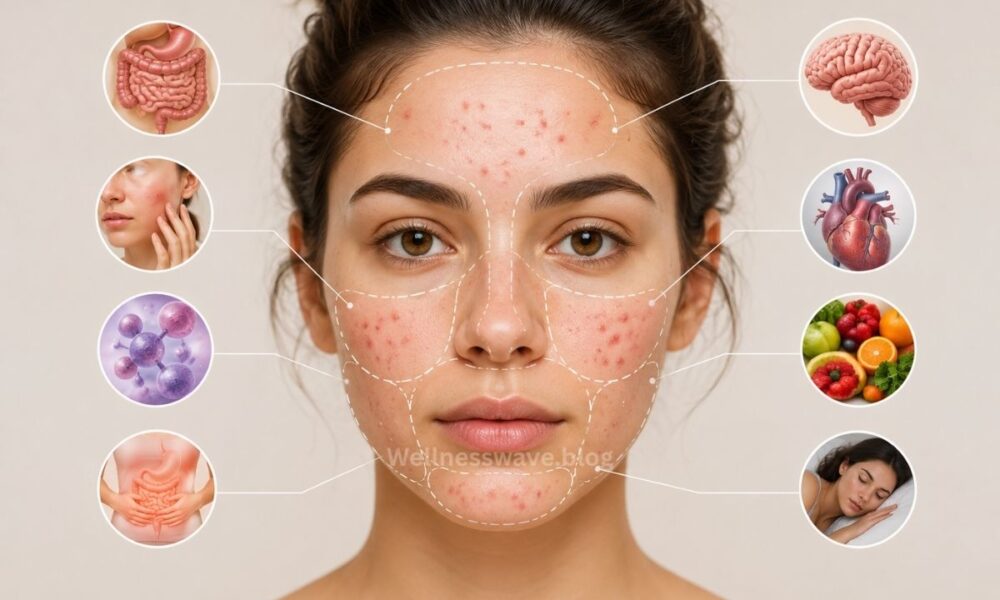
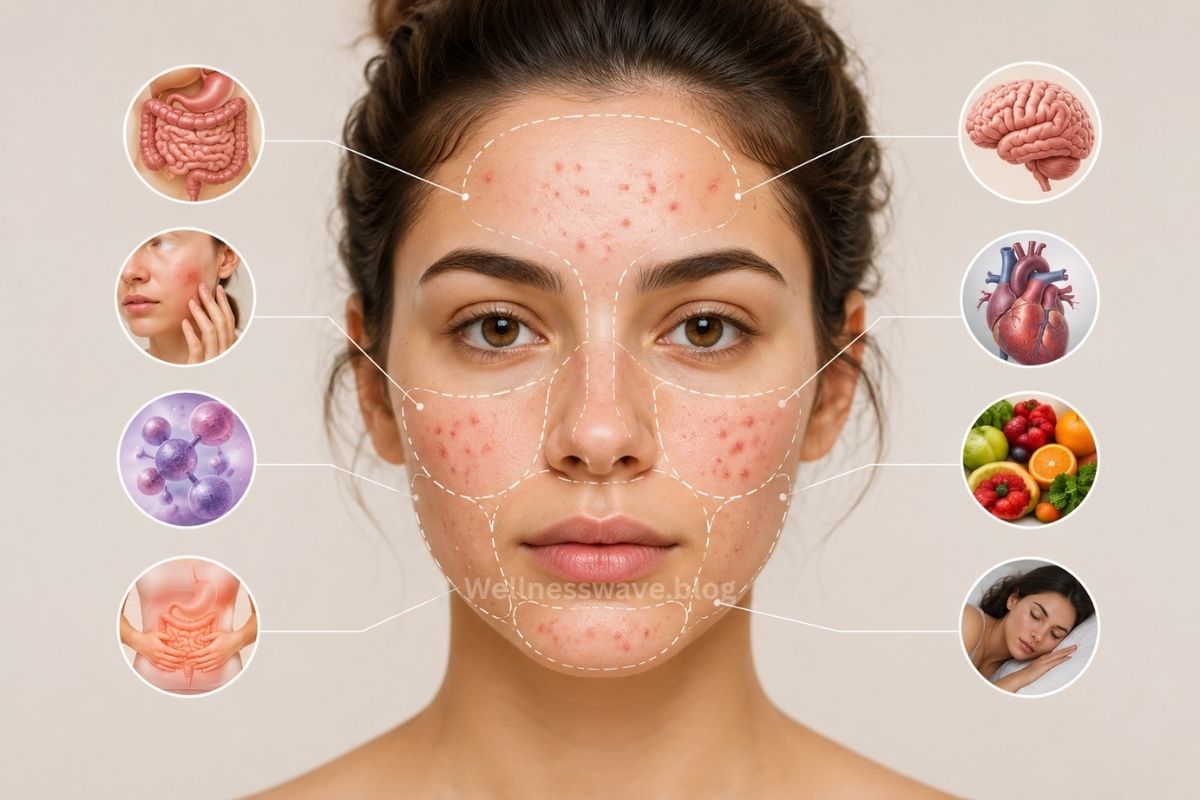
Did you ever notice, pimples occur on the same area of the face every time. Sometimes on the forehead, and sometimes only on the cheeks or only on the chin. This is commonly known as “Acne Mapping”.
The idea of acne mapping helps understand that these breakouts occurring on different areas of the face can be linked to a lifestyle habit, skin issue, hormonal imbalance or any concern related to internal health.
This concept basically comes from Traditional Chinese Medicine (TCM) and modern dermatology’s mixed observations. This isn’t a 100% scientific diagnosis, in fact it is a pattern based observation tool which helps understand possible triggers.
What is Acne Mapping?
Acne mapping is a concept that connects different areas of the face to possible internal or external triggers such as:
- Hormonal imbalance
- Digestive issues
- Stress
- Poor hygiene or makeup habits
- Diet and lifestyle
Acne vulgaris occurs when hair follicles get clogged with oil, dead skin cells, and bacteria. Acne mapping does not replace medical diagnosis, but it helps identify patterns that may guide better skincare and lifestyle awareness.
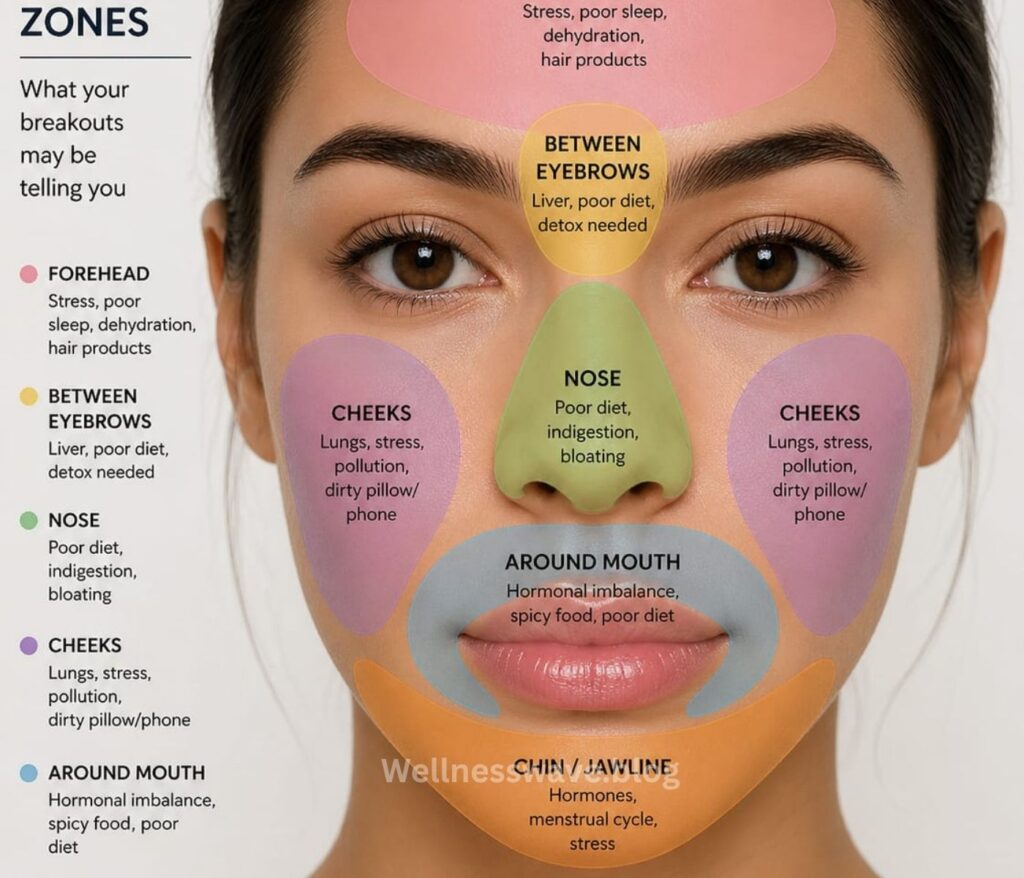
Acne Mapping Zones on the Face
1. Forehead Acne
Possible causes:
- Digestive issues (poor gut health)
- Stress and lack of sleep
- Excess oil production
- Hair products touching forehead
2. Chin & Jawline Acne
Possible causes:
- Hormonal imbalance (very common in women)
- Menstrual cycle changes
- PCOS-related hormonal fluctuations
- Stress
3. Cheek Acne
Possible causes:
- Dirty pillow covers or phone screens
- Pollution exposure
- Makeup buildup
- Touching face frequently
4. Nose Acne
Possible causes:
- Excess oil production
- Enlarged pores
- High sebum activity in T-zone
- High sugar or oily diet
5. Around the Mouth Area
Possible causes:
- Toothpaste irritation
- Hormonal changes
- Digestive imbalance
- Frequent lip product use
Does Acne Mapping Have Scientific Proof?
Acne mapping does not really have a scientific proof, it is not strict medical science, but it is inspired by :
1. Traditional Chinese medicine (TCM)
2. Ayurvedic body-skin connections
3. Modern dermatology observations
Dermatologists agree that while face zones do show oil distribution patterns, acne is usually caused by a combination of internal and external factors, not just one specific organ connection.
So think of acne mapping as a guideline, not a diagnosis tool.
The “Death Triangle” (Danger Triangle of the Face)
Now let’s talk about something very important that goes beyond skincare aesthetics.
The Death Triangle, also called the Danger Triangle of the Face, is an area that requires serious caution and attention.
What is the Death Triangle?
The Death Triangle refers to the area:
- From the corners of the mouth
- Up to the bridge of the nose
This region is called dangerous because veins in this area are directly connected to deeper parts of the brain.
Why is it Dangerous?
If a pimple, cut, or infection in this area is:
- Squeezed
- Popped aggressively
- Or becomes infected
Bacteria can, in rare cases, spread to the brain through blood vessels.
This may lead to serious complications like:
- Brain infections
- Cavernous sinus thrombosis (rare but serious condition)
- Severe swelling or infection spread
Important Truth
This is very rare, especially with modern hygiene and skincare, but doctors still warn against popping pimples in this area. So it is very important to understand that popping and squeezing pimples in the nose and upper lip area can be really dangerous.
Safe Skincare Practices for Acne Prevention
1. Keep Skin Clean
Wash your face twice a day with a gentle cleanser. If you stay in a polluted city, wash your face with normal warm water after coming back home.
2. Don’t Pick or Pop Pimples
Picking or popping pimples can cause scarring, infections and dark spots. When you pop a pimple, the white substance also called pus , it comes out opening the unclean acne space for bacteria to enter which can cause serious infection.
3. Maintain a Healthy Diet
Maintaining a healthy diet is also very important to avoid acne. Reduce or cut down on refined sugar, deep fried foods, processed and packaged foods and dairy (if it triggers acne for you).
4. Manage Stress
Stress can increase cortisol which can worsen the existing acne. Stress is also known to be the major contributor to acne.
5. Keep Hygiene in Check
Clean phone screens , because they touch your cheeks while you are on the phone. Avoid taking your phone to the washroom because harmful bacteria and germs can easily stick to it. When you use your phone in the toilet, it gets exposed to contaminated surfaces, unwashed hands, and bacteria released into the air after flushing. Since we touch our phones frequently and bring them close to our face, these germs can spread easily and may affect our health. Keeping your phone out of the washroom helps maintain better hygiene and reduces the risk of infections.
It is also important to change pillow covers frequently, wash make-up brushes and don’t touch your face frequently.
6. Use Non-Comedogenic Products
Choose skincare and makeup products that are labeled as non-comedogenic, which means they won’t clog your pores. Heavy or oily products can block the skin and make acne worse by trapping dirt and excess oil. Using lightweight, skin-friendly products helps keep your pores clear and reduces the chances of breakouts.
When Should You See a Dermatologist?
You should seek medical help if:
- Acne is painful or cystic
- It leaves scars
- Over-the-counter treatments don’t work
- It affects self-confidence significantly
A dermatologist can provide treatments like:
- Prescription creams
- Oral medication
- Hormonal therapy (if needed)
- Chemical peels or laser treatment
The Bottom Line
Acne mapping helps you understand why pimples may appear again and again in certain areas of your face, but it should not replace proper medical advice. It simply gives you an idea to look at your daily habits, food choices, stress levels, and skincare routine more carefully.
It is also important to know about the Danger Triangle of the face, especially the area around the nose and upper lip. Pimples in this area should not be squeezed or popped because it can increase the risk of infection.
Healthy skin does not come from quick fixes. It comes from regular care, good habits, balance, and understanding what your body is trying to tell you.


No Comment! Be the first one.