Can food really change your mind? Have you ever heard people saying “ You are what you eat”?. People tend to take this phrase very lightly , but how many of you really knew that the food we eat is silently shaping our mood, thoughts and concentration? In today’s fast life the primary focus is our physical health, and we tend to control and improve our physical health by balancing the foods we eat, but many don’t really know that every bite we eat counts and shapes the brain chemistry. Taking one bite of a sugary drink or one day or high carb diet might not affect the body but it is definitely going to affect the brain, the thought process, the way you feel, that is the reason why we sometimes feel calm and sometimes feel lethargic or irritated after eating certain foods, this isn’t a coincidence, it’s clearly the food-mind connection.
Your brain is always in work mode, it works 24/7, takes care of your breathing, movements, senses, thoughts , heartbeat, and even keeps working when you are asleep. Did you ever think just like our body our brain also needs the right fuel, the brain needs constant fuel to keep working properly and the fuel comes from what we eat, and what is in the fuel makes a difference.
How food and mental health are linked?
People once said, “You can’t think on an empty stomach. But today’s modern science proves that every meal you eat changes your brain’s hormones.
Modern nutritional psychiatry proves food is not only a fuel for our body, but also for our brain and mood regulating chemicals. Studies show that people with a poor diet including processed food, sugar, fried and junk foods are more prone to anxiety and depression on the other hand, people with a balanced and natural diet including fruits, veggies, whole grains and nuts have a more stable mood along with lower or zero stress levels.
The Two Way Connection
Here there is a two way connection – Food changes your mood and the mood changes your food choices
For instance – Stressed and depressed people tend t consume more of sugar junk foods and processed foods, to satisfy their cravings which temporarily releases dopamine (a pleasure hormone), which later on makes them feel low on mood , more depressed, irritated and lethargic, which again brings them to the same place from where they started and this becomes a vicious cycle.
The Brain and Gut Connection
There are more than 100 trillion bacteria in your stomach , these are also called the gut microbiome.
These tiny bacteria directly communicate through the gut brain axis, and they remain happy when you eat healthy, fiber rich and probiotic food and support the production of serotonin (happy hormone), that is why the gut is also known as the second brain. These tiny good bacteria protect the lining of your intestines and ensure strong protection against the bad bacteria. They also reduce inflammation and improve how well you absorb nutrients from the food you eat and activate neural pathways that travel between the brain and the gut.
Food Impact On The Brain
1. Glucose and Brain Energy
Your brain is a hungry organ, it consumes 20% of the body’s total energy, but the energy that it consumes should be in a constant flow. When we consume sugary drinks, pastries and junk food, blood sugar goes high instantly, but also crashes very quickly which leads to mood swings, anxiety and irritability. During the crash, your brain is suddenly deprived of fuel and that’s when you start feeling moody, anxious, tired or irritated. This sudden up and down pattern affects the brain’s neurotransmitters particularly serotonin and dopamine which regulate mood, focus and emotional stability.
Overtime , these constant sugar spikes can reduces your brain’s sensitivity to insulin and start to impact your memory and emotional control. That’s why a steady energy supply through whole grains, nuts and fruits helps your brain stay calm and focused and balanced.
So, every time you consume a sugar loaded snack, you take your brain for a roller coaster ride.
2. Nutritional Deficiency and Mind Fog
Your brain works like a high performance machine, and just like a high performance machine needs the right fuel , similarly your brain needs proper nutrients which keep the brain focused, sharp and calm. Nutrients like Vitamin B12, Vitamin D, Iron, Zinc and Magnesium are the most important nutrients for your brain. Deficiency of any of these vitamins can lead to low motivation, brain fog and even mild depression. Brain fog doesn’t allow your brain to focus properly, you feel confused and mental activity reduces. This is a sign that you need to fuel your brain more with enough nutrients.
In some cases brain fog may also interfere with your performance at school or work and can make it difficult for you to concentrate or complete tasks. Brain fog is known to occur as a result of low-level chronic inflammation in the brain, which can be caused by a variety of different factors. [1]
Vitamin B12 helps in the production of chemicals which are responsible for mood and memory, deficiency of it leads to dullness, lower energy and tiredness.
Vitamin D helps balance mood and hormones, Sunlight is the best source of Vitamin D, deficiency of which can cause low mood and anxiety.
Iron carries the oxygen to the brain, deficiency of it leads to tiredness and low level of energy as the brain does not receive sufficient amounts of oxygen.
Zinc helps in handling stress and creates stronger and smoother signals between neurons.
Magnesium is a well known natural relaxer , it helps the brain neurons to remain calm and keeps the brain free from stress.
Bad Fats vs. Good Fats
Processed oils, fried snacks and trans fats like bakery items, packet food, oily and preserved items tend to increase inflammation in the body which strongly affect the brains neurons, which results in mood swings , memory dullness and even anxiety and irritability. When these fats are consumed regularly and become a part of your diet that is when the brains signals start getting slower and weaker. These are known as bad fats.
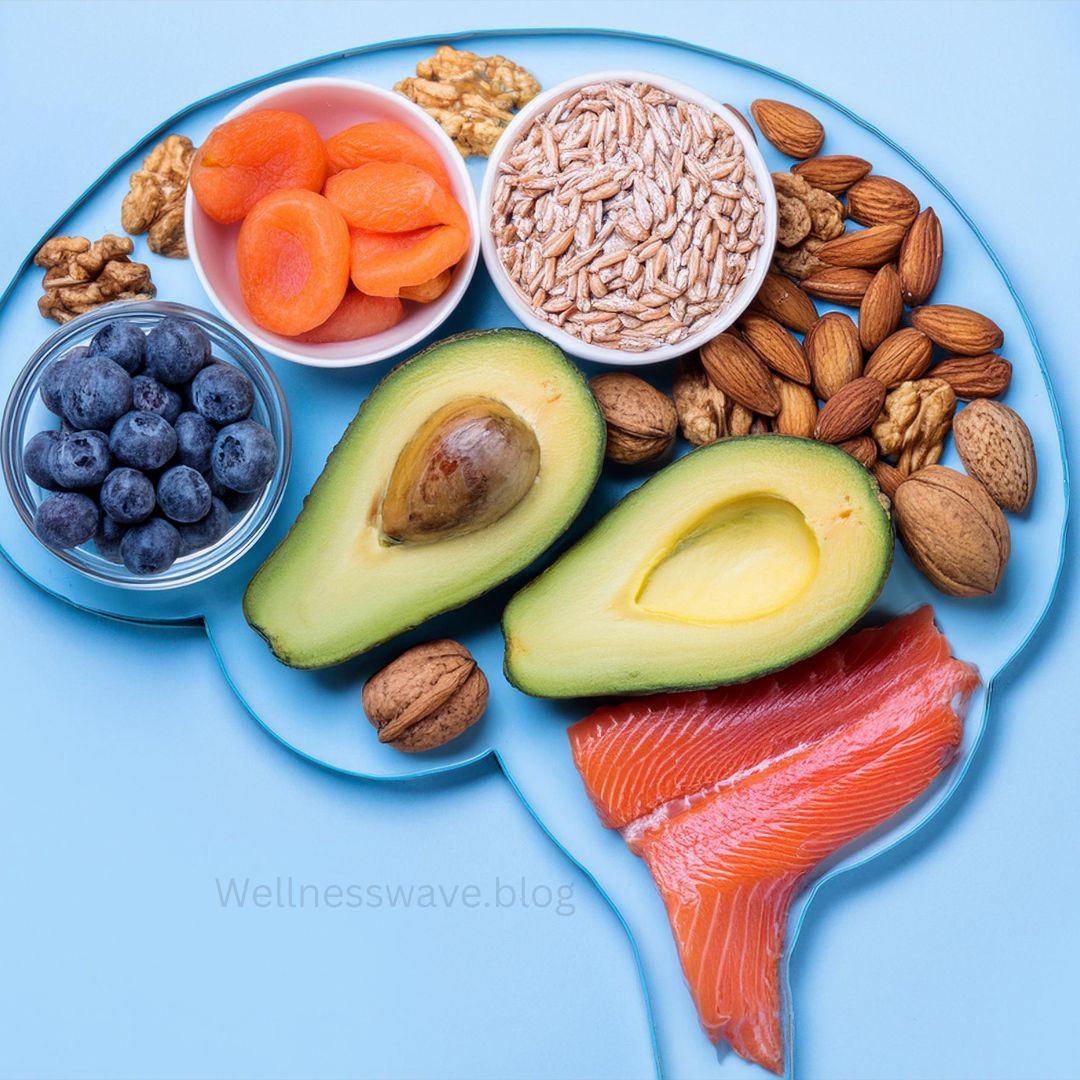
On the other hand, good fats like Omega-3 fatty acids — found in fish, walnuts, chia seeds, and flaxseeds work like a safety shield for your brain. They keep the communication between your brain cells smooth, so your memory stays sharp and your mood stays steady. When you eat Omega-3 rich foods regularly, your brain feels calmer, more focused, and less stressed. It’s like giving your mind the right kind of fuel to think clearly and feel good.
Gut Bacteria and Emotional Intelligence
Recent research shows that you gut microbes not only affect your mood but also your emotional decisions and empathy. [2] If your gut bacteria is healthy , you remain emotionally stable and handling conflicts seems to be a bit easier and social interactions don’t give you discomfort. A study revealed that people who consume probiotic rich foods remain much balanced in social situations.[3]
Our brain and your gut are deeply connected — and if you neglect your gut, your brain will feel it too. If you maintain a healthy gut by choosing good food, plenty of fiber, and cutting down on processed junk, you’ll likely see a boost in emotional intelligence too.
Emotional Eating and the Mind Trap
Emotional eating doesn’t mean eating because your body is hungry, it means because your mind is craving comfort or you are depressed and crave to eat some junk food which you love. It is the most common mental health traps – whenever we feel sad, stressed, lonely, or demotivated we tend to reach out to comfort foods like choclates, chips, fried snacks or deserts – because they give us a short burst of relief. For a few minustes, your rain releases dopamine (the pleasure hormone) and you start feeling better. But soon after, guilt, bloating and low energy kick in and you start feeling lethargic depressed and frustrated and the same emotional cycle starts again. [4]
low mood → eating for comfort → temporary pleasure → regret and tiredness.
The Bottom Line
The food you eat everyday is not just shaping your body, but your thoughts, emotions and the way you experience life. Every bite you take is a message to your brain – either peace or chaos. Mental health is not just a mind issue it is in fact a life story that begins from your plate.
No Comment! Be the first one.